
Insights, Trends &
AI Automation Guides
Stay ahead of the curve with the latest strategies, industry use-cases, and technical tutorials on building powerful AI agents and automated workflows.
Introduction
Generating leads is a crucial part of business growth, but attracting potential customers is only the first step. Many businesses invest significant time and resources into marketing campaigns, website optimization, and customer acquisition strategies to generate leads. However, generating leads alone does not guarantee sales.
One of the biggest challenges businesses face is converting leads into paying customers. Many potential customers show initial interest but fail to take the next step. In many cases, the reason is simple: a lack of timely and consistent follow-up.
Research and industry experience consistently show that leads often require multiple interactions before making a purchasing decision. Without proper follow-up, businesses risk losing valuable opportunities to competitors who engage prospects more effectively.
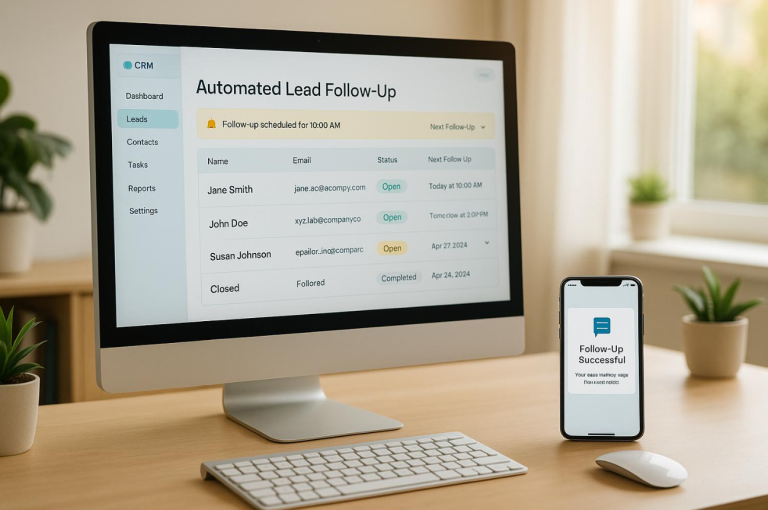
This is where automated follow-ups can make a significant difference. By helping businesses stay connected with prospects, automation improves engagement, nurtures relationships, and increases the likelihood of conversion.
Why Follow-Ups Matter in the Sales Process
Most customers do not make a purchasing decision immediately after their first interaction with a business. They may need more information, time to compare options, or additional reassurance before committing to a purchase.
Effective follow-ups help businesses stay visible throughout the decision-making process. They provide opportunities to answer questions, share relevant information, and maintain engagement with potential customers.
Consistent communication also helps build trust. When prospects receive timely responses and useful information, they are more likely to view a business as reliable and professional.
Without follow-ups, even highly interested leads can lose interest, forget about the business, or choose a competitor that communicates more effectively.
The Problem With Manual Follow-Ups
While follow-ups are essential, managing them manually can be challenging, especially as the number of leads grows.
Many businesses rely on spreadsheets, reminders, or manual tracking systems to manage customer interactions. While this may work for a small number of leads, it becomes increasingly difficult to maintain consistency as customer inquiries increase.
Common challenges of manual follow-ups include:
- Time-consuming processes
- Missed follow-up opportunities
- Delayed responses
- Inconsistent communication
- Difficulty tracking lead status
As a result, businesses may lose potential customers simply because they failed to follow up at the right time.
How Automated Follow-Ups Improve Lead Conversion
Automated follow-ups help businesses maintain communication with prospects without relying entirely on manual effort.
When a lead enters the system, automated workflows can trigger personalized messages, reminders, and engagement sequences based on customer actions and interests.
This ensures that prospects receive relevant communication at the right time.
Automated follow-ups improve lead conversion by:
- Delivering timely communication
- Keeping prospects engaged
- Reducing response delays
- Supporting lead nurturing efforts
- Maintaining consistent customer interactions
By staying connected throughout the customer journey, businesses increase the chances of converting interest into action.
Benefits of Automated Follow-Ups
Automated follow-up systems offer several advantages for businesses looking to improve lead conversion rates.
Improved Lead Engagement
Regular communication helps keep prospects interested and informed throughout the buying journey.
Reduced Response Delays
Automation ensures that leads receive immediate acknowledgment and follow-up communication without unnecessary waiting.
Better Conversion Opportunities
Consistent engagement increases the likelihood that prospects will take the next step toward becoming customers.
Increased Efficiency
Teams spend less time managing repetitive tasks and more time focusing on high-value interactions.
Consistent Customer Communication
Every lead receives a structured and reliable follow-up experience regardless of business hours or workload.
How Automation Helps Businesses Stay Connected
Modern automation tools provide businesses with multiple ways to maintain communication with prospects.
These capabilities often include:
- Automated reminders
- Follow-up message sequences
- Customer engagement workflows
- Lead tracking and monitoring
- Instant responses to inquiries
Instead of relying on memory or manual processes, businesses can create structured workflows that guide leads through the customer journey.
This helps ensure that no opportunity is overlooked.
Why Businesses Are Investing in Lead Automation
Customer expectations have changed significantly in recent years. Today’s consumers expect faster responses, personalized experiences, and convenient communication channels.
Businesses that fail to meet these expectations risk losing potential customers to competitors.
Lead automation helps businesses respond to these changing expectations by improving efficiency, reducing communication gaps, and supporting stronger customer relationships.
As businesses continue to grow, automation also provides scalability. Instead of increasing workload for teams, businesses can manage larger volumes of leads while maintaining a consistent customer experience.
For many organizations, lead automation has become an essential part of modern sales and customer engagement strategies.
How Inforowbot Helps Businesses Manage Lead Follow-Ups
Managing lead follow-ups manually can be challenging, especially for growing businesses. Inforowbot helps simplify this process through intelligent automation and customer engagement solutions.
With features such as AI-powered chatbots, automated workflows, lead management tools, and customer communication automation, businesses can stay connected with prospects throughout the sales journey.
By automating routine interactions and follow-up processes, Inforowbot helps businesses improve efficiency, reduce missed opportunities, and create better customer experiences.
Conclusion
Generating leads is important, but successful businesses understand that follow-up is what drives conversions.
Without consistent communication, even the most promising leads can be lost. Automated follow-ups help businesses stay engaged with prospects, provide timely information, and guide potential customers through the decision-making process.
By reducing manual effort and improving communication consistency, automation helps businesses increase lead conversion rates while delivering a better customer experience.
Discover how Inforowbot’s automation, lead management, AI chatbot, and customer engagement solutions can help your business stay connected with prospects, streamline follow-ups, and convert more opportunities into customers.
Visit: https://inforowbot.ai/
FAQs
Q1. What are automated follow-ups in sales?
Automated follow-ups are pre-set messages or actions that are sent to leads automatically to keep them engaged and guide them through the buying process.
Q2. How do automated follow-ups improve lead conversion?
They ensure timely communication, reduce response delays, and help businesses stay connected with potential customers until they are ready to buy.
Q3. Can small businesses use follow-up automation?
Yes, small businesses can use automation tools to manage leads efficiently and save time on manual follow-ups.
Q4. Can automation replace manual follow-ups completely?
Automation handles repetitive tasks, but businesses may still need human interaction for complex or high-value customer conversations.